

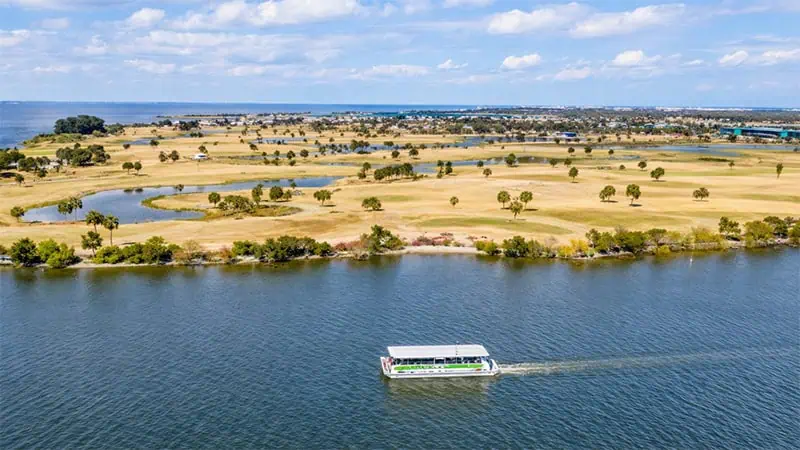
Ask anyone who’s cruised the Thousand Islands about their favorite moment, and you’ll hear the same stories: a pod of dolphins surfacing right beside the boat, or a manatee rising for a whiskery breath just feet from the rail. Around Cocoa Beach, these aren’t rare, lucky encounters — they’re a near-daily part of life on the Banana River Lagoon.
Here’s your complete guide to seeing wild dolphins and manatees on a Cocoa Beach boat tour.
Why Cocoa Beach Is One of Florida’s Best Places to See Dolphins
Cocoa Beach sits on a barrier island between the Atlantic Ocean and the Banana River Lagoon, part of the greater Indian River Lagoon system — the most biologically diverse estuary in North America. More than 4,000 species of plants and animals live here, including two of Florida’s most beloved: the Atlantic bottlenose dolphin and the West Indian manatee.
The Thousand Islands, a cluster of mangrove islands directly behind Cocoa Beach, act as a natural sanctuary. The calm, shallow waters concentrate the mullet and other baitfish that dolphins hunt, and the seagrass beds are exactly what manatees need to feed. A slow-speed, no-wake zone runs through much of the area, which keeps the water peaceful — and keeps the wildlife relaxed and close.
Best of all, you don’t have to venture into open ocean to find them. These are resident dolphins, living in protected water just minutes from the dock. That means calm rides, no seasickness, and sightings on the vast majority of trips.
When Is the Best Time to See Dolphins in Cocoa Beach?
Happily, dolphins don’t follow a season — the Banana River’s resident bottlenose dolphins are active all year long. Morning tours often catch them feeding along the channel edges, and it’s not unusual for a curious dolphin to swing over for a closer look at the boat. Watching a pod work together to trap fish against a mangrove shoreline is a masterclass in teamwork you’ll never see at a marine park.
A few timing tips from the water:
- Mornings typically offer the calmest water and the most active feeding behavior
- Sunset trips trade a little activity for spectacular skies — and dolphins often show up anyway
- Incoming tides get baitfish moving, which gets dolphins hunting
When Do You See Manatees?
Manatees live in the lagoon year-round, but your odds change with the seasons.
Winter (November–March) is peak manatee season. Manatees can’t tolerate water much below 68°F, so when temperatures drop, they crowd into the warmer, protected pockets of the lagoon. On cool winter mornings, it’s common to spot a dozen or more on a single trip.
Spring and summer spread them out, but sightings remain frequent — especially early in the day when the water is calm and manatees graze the seagrass beds near the islands.
Look for the telltale signs: a swirl of water called a “footprint,” a gray snout breaking the surface for a breath, or a broad, paddle-shaped tail sliding under.
What Is a Dolphin Boat Tour Like?
Most Cocoa Beach dolphin tours run 1.5 to 2.5 hours through calm, protected lagoon water. Because the Thousand Islands sit in a no-wake zone, boats cruise slowly and quietly — which is exactly what you want. Relaxed wildlife behaves naturally, and slow speeds give everyone time to spot, watch, and photograph.
A good captain makes all the difference. Local guides know where the pods have been feeding that week, can read the water for the subtle signs of a manatee below, and share the ecology and history behind everything you’re seeing — from the mangrove islands to the space program’s mark on the coastline.
No experience or special fitness is needed. Step aboard, find a seat, and keep your eyes on the water.
Wildlife Etiquette: How to Watch Responsibly
Manatees are protected under the Endangered Species Act and Florida law, and dolphins are protected by the Marine Mammal Protection Act. Responsible tour operators follow passive-observation guidelines:
- Let the animals come to you — never chase, corner, or block their path
- No touching or feeding (it changes their natural behavior and it’s illegal)
- Slow speeds and low noise in wildlife areas
- Respect the seagrass beds manatees depend on
The reward for patience is real: relaxed animals linger. A manatee that feels safe will often surface repeatedly right beside the boat, and curious dolphins stick around far longer when nobody’s chasing them.
What Else Will You See in the Thousand Islands?
Dolphins and manatees headline the show, but the supporting cast is deep: great blue herons, roseate spoonbills, ospreys, brown pelicans, stingrays gliding over the flats, horseshoe crabs, and — if your timing is right — a rocket launch climbing over Cape Canaveral in the distance. Bring a camera; you’ll use it.
Frequently Asked Questions
Are dolphin sightings guaranteed? No ethical operator guarantees wild animals — but in these waters, dolphin sightings happen on the vast majority of tours, and manatees are frequent visitors, especially in winter.
Is a dolphin tour good for kids? It’s one of the best family activities in Cocoa Beach. There’s no paddling, no hiking, and no minimum skill level — toddlers through great-grandparents can share the same boat. Kids love being the first to yell “dolphin!”
What should I bring? Sunscreen, sunglasses, a hat, water, and your camera or phone. A light jacket is smart for winter or sunset trips. Boats have shade and seating, so that’s really it.
Do tours run in the rain? Light rain usually doesn’t stop a trip — only lightning or unsafe conditions do. Reputable operators reschedule or refund if weather forces a cancellation.
How far in advance should I book? Weekends, holidays, and winter manatee season fill fastest. A week or more ahead is smart; weekday spots sometimes open up last-minute.
Meet the Locals — The Original Ones
Long before the surf shops and the space program, dolphins and manatees called these waters home. A guided boat tour through the Thousand Islands is your chance to meet them on their terms — quietly, respectfully, and unforgettably close.


